
CommercialAcousticsGlass PartitionsOffice Design
The Rise of Acoustic Glass Partitions in Modern Open-Plan Offices
Kiran Slido Craft Engineering Team•
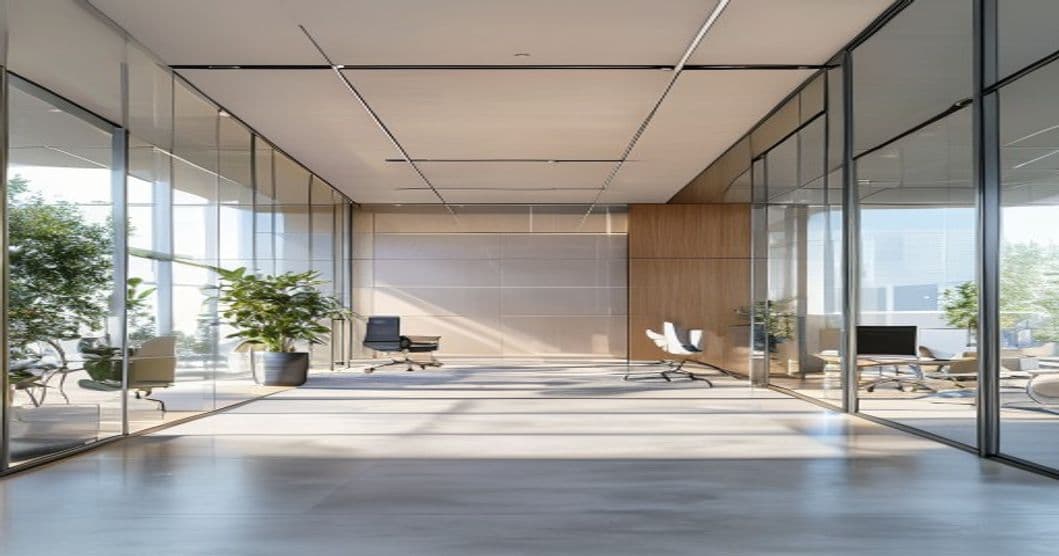
What are acoustic glass partitions? Acoustic glass partitions are interior glazing systems utilizing multi-layered laminated glass with a Polyvinyl Butyral (PVB) acoustic interlayer to block sound transmission while maintaining visual transparency. The open-plan office has dominated commercial design for the last two decades, but it suffers from a critical flaw: a severe lack of acoustic privacy.
The Problem with Standard Office Glass
Standard tempered glass is an acoustically reflective material. It allows noise to bounce around a room and, due to its low mass, provides minimal resistance against sound transmission. A standard single-glazed glass office front typically offers an STC rating of less than 30, resulting in virtually zero speech privacy.The Acoustic PVB Glass Solution
Acoustic glass partitions solve this by utilizing advanced laminated glass. This involves sandwiching a specialized acoustic interlayer between two or more sheets of glass. This PVB layer acts as an acoustic dampener, absorbing sound vibrations and reducing noise transmission by up to 40 dB.Designing for Maximum STC
To achieve a high STC rating (STC 40+), the partition system must consider more than just the glass:- Decoupled Frames: The aluminum framing must feature acoustic breaks to prevent structure-borne noise from traveling through the metal.
- Precision Sealing: The junctions where the glass meets the frame, floor, and ceiling must be flawlessly sealed with compression gaskets.
- Acoustic Doors: Integrating a heavy-duty acoustic swing or sliding door with drop-down seals is essential to maintain the room's overall sound rating.